
How do I know if I can go from a normal AGM GEL or Acid battery to a Lifepo4 without making any changes?
To know if you can simply change from one type of battery to another, You have to do a series of checks which I am going to explain here in detail, They are very simple and will make the change as simple as possible..
- Check the type of alternator you have.
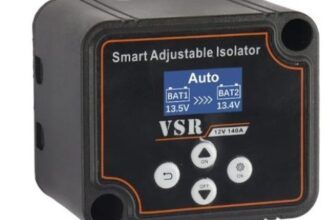
- Find out the type of relay you currently have (normal, the automatic one, the automatic v2 for euro 6 o booster).
- Output voltage of your alternator.
1 How do I know the type of alternator I have?
It is very easy to find out the type of alternator you have to know if it is suitable for lifepo4. The first thing is to know if it is euro 6, If it is, you almost certainly have a smart alternator and therefore need a booster..
Start the vehicle engine, the lights, radio, air conditioner, all electrical must be turned off. You can drive or be parked, but with the engine running, This should remain like this between 20-30 minutes without turning off. With a multimeter we must check the battery voltage, during those 30 minutes several measurements can be made, The voltage must always be higher than 14v, If we have measurements of 12.5.. 13.2.. 13.5.. that go up and down without being stable, you have an intelligent alternator. That means you need a BOOSTER.
2 How to know if you currently have a relay or booster
We will take a multimeter and measure the main battery., then we will measure the secondary battery, If you have a relay the voltage will be very similar in the 2 batteries, If, on the other hand, the voltage is higher than +14v, you have a booster in your installation., and you could directly install a lifepo4 battery.
Standard on most van campers, and motorhomes usually have this relay inside the home switchboard., connected to the D+ of the alternator or to a locked ignition. If your camper does not have a switchboard in the housing part, To know the type of manual/automatic relay you would have to search for it and look at the model.
3 alternator voltage
Assuming your alternator is “normal” if the output voltage is low, Below 14.00v the chances of your battery charging very slowly are very high., In this case, the recommendation would be to install a booster..
If, on the other hand, the voltage is too high above 14.5v, the chances of charging too quickly increase., It is also advisable to mount a booster.
* Whatever the situation, It is recommended to ALWAYS install a battery monitor, and with the battery discharged, Starting the engine you can quickly see at what speed it is charging..
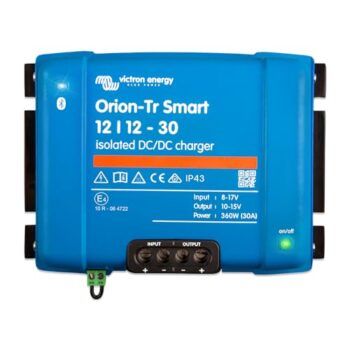
Valid booster types for LIFPO4
I leave a list with those that usually ride in the group, some are comparable and others are not.
Booster homologables:
Booster 50a (Victron) * improved version, It doesn't get hot and it's smaller.
Booster 18a (victron)
Booster 30a (victron)
Booster 20a (votronic)
Booster 60a (Renogy)
Not homologated:
Booster 30/60a (chino)
20/40a (chino eco-worthy)
Other considerations to keep in mind when switching to lifepo4
He battery charger ideal for lifepo4 would be one in which the output voltage could be adjusted to 14.2v, It is not always possible, either due to price or practicality.. What most of them do have are several charging modes., which are usually acid mode (14.4v) GEL mode (14.2v) AGM mode (14.7v), Lifepo4 way (14.6v) In any of the modes that we select, the lifepo4 battery will charge. But being conservative and trying to extend the useful life of the battery, it is advisable to set the mode closest to 14.2, Depending on the model and manufacturer, the closest could be 14.1 o 14.3 according to the case (like CBE chargers). Any of the options would be valid., although you can notice that it charges a little below the maximum of the charger at 14.1v.
Regarding solar regulators, it would be exactly the same, GEL mode usually works well, But if it is a quality MPPT regulator, it will allow you to set user mode and adjust the parameters manually., in that case you can see here the data to modify.
Lifepo4 batteries based on their reliability – quality, from best to worst
First option KEPWORTH Batteries
They are good quality batteries, are being used in the facebook group a lot of years, They work very well and the failure rate is very very low. Ideal for high consumption, They usually have a BMS of the same power as the battery capacity except in the 180ah model. (bms 100a) and in the 300ah (bms 200a), They have warehouses in Spain, Poland and Germany, so delivery times are between 3-12 days approximately.
They tend to give the 95-105% of the load they advertise.
Available here in 100ah, 120ah, 135ah, 200ah, 300Ah the 400
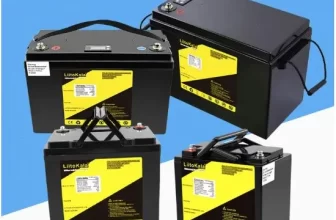
Second option Official Liitokala batteries
Ideal for moderate consumption, they are also more economical., For high consumption it is recommended to mount several batteries in parallel, They usually come with a bms of 100a (1200w). This seller has some models in Germany and the Czech Republic, does not usually indicate it, so if they are lucky they arrive in 10-30 dias. If you do not have stock and ship from China, it may take up to 90 dias.
They tend to give the 80-95% of the load they advertise. Although there have been cases that have even exceeded the 100%.
Available here.
Third option NON-official Liitokala batteries
It is the cheapest option, They are recommended in simple installations, with moderate/low consumption if your idea is to use a microwave, air-conditioning, hair dryer, induction.. My recommendation is that you use Kepworth, o varias flying fish en Paralelo. Some cases have appeared in which they have arrived downloaded, Normally putting load on them they work normally
They tend to give the 80-90% of the load they advertise.
Available Here
To check that they work well, and give the correct capacity you should use a battery monitor